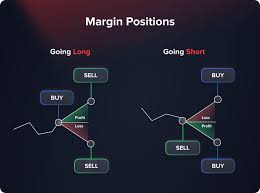
In the world of trading, the desire to make bigger moves in the market is common. However, many traders don’t have the capital to make large trades on their own. To address this, margin trading helps you to borrow money from a broker to increase your buying power. While this opens up the potential for higher profits, it also comes with some risks.
Margin trading can be a good tool when used correctly, but it’s crucial to understand how it works and how to manage the risks. We will tell you about the basics of margin trading and highlight some of the common mistakes to avoid. This will help you use margin trading wisely and reduce the chances of costly errors. Many traders also use platforms like MetaTrader 4 to manage their trades easily.
What is Margin Trading?
Margin trading is a process that involves borrowing funds through a broker to trade in financial instruments like stocks, options or forex. You can use it to borrow money through a broker that enables you to purchase more than you would have with only your own money. Through borrowed money, you get the opportunity to make a greater amount of money in the market.
How Does Margin Trading Work?
To engage in margin trading, you must open a margin account with a broker. This is unlike a regular trading account. Trading on Margin, the broker permits you to borrow some of the funds required to make a trade, and you deposit a sum of money. The borrowed money is referred to as the margin loan.
For example, if you want to purchase 100 shares of a stock that costs 50 per share. The overall price of the trade would amount to 5,000 dollars. With a 50% margin, you would have to deposit USD 2,500 of your own funds, and the broker would loan you the balance of USD 2,500.
Leverage: Margin Trading Around
Leverage is one of the important advantages of margin trading. Leverage is that you can manage a bigger position using a strike force of smaller capital that is your own. In the above example, you have direct control of the stock worth of 5, 000 but only with 2,500 of your own money. It increases your purchasing strength, and you have the potential to make more money.
For example, when the stock price increases and goes to 60 per share, then your 100 shares would be worth 6000. You will be able to sell them at a profit of 1000 dollars. But if the price falls to $40 per share, then you will only be left with a value of $4,000 in your position and then lose 1,000 dollars after paying off the loan.
Conclusion
It is an exciting experience to margin trade to boost your purchasing power and the returns you may get in the market. You should keep in mind that it cannot be risk-free. Through the use of money to trade, you are able to increase the profits and losses. Maybe you thought about doing margin trading, then you should get down to basics, learn about the risks of it and see whether it is the right method of doing it.